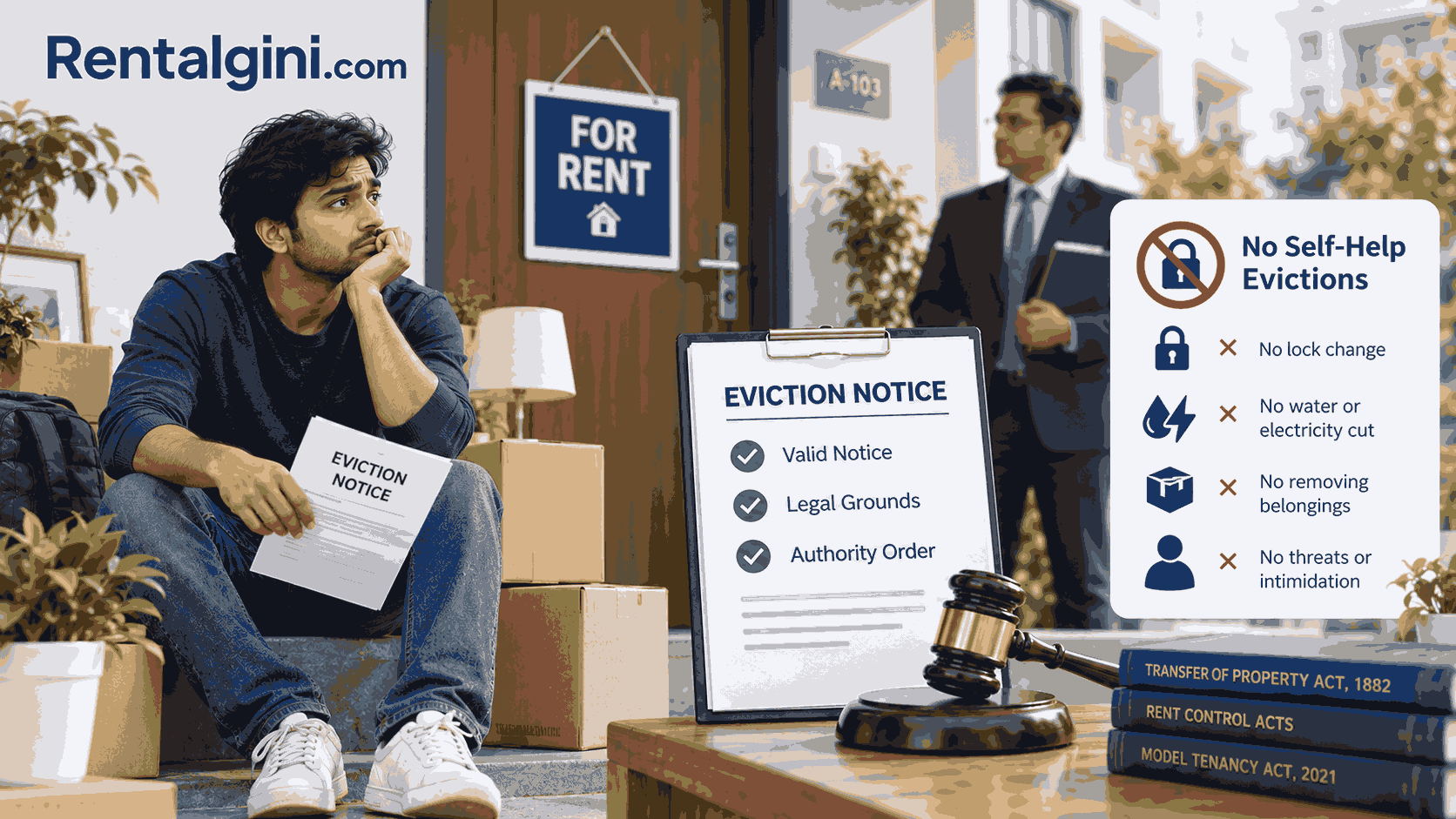
- A rent agreement should clearly identify the landlord, tenant, property, rent, deposit and payment terms.
- Tenure, lock-in, notice, maintenance, property-use, default and handover clauses reduce ambiguity.
- The agreement should comply with applicable stamp-duty and registration requirements and be signed by the parties and witnesses.
A common story: a tenant pays a heavy security deposit while moving in. The landlord refuses to refund it at all, claiming damages that were never recorded. This is what happens when you treat a rent agreement as a formality, not a document.
According to the Model Tenancy Act, 2021, security deposits for residential properties must be capped at two months' rent, and landlords must return them within a month after a tenant moves out. Yet, some states stretch it to 10 months' rent.
The lack of a proper agreement leads to disputes. However, a rent agreement is easy to understand clause by clause. This blog explains every section of a rent agreement, along with sample wording you can use.
Key Takeaways
- Details of the landlord, tenant, and property come first in a rent agreement.
- Security deposit, rent date, and mode of payment should be specified.
- The lock-in and notice period clause adds a layer of protection.
- Maintenance responsibilities are divided between the landlord and the tenant.
What Details About the Landlord, Tenant, and Property to Add?
Every agreement opens with the parties and premises clause, which is where most drafts lag. It is not enough to write names and the address. Authorities need proper legal identification:
- Complete names of both parties
- Permanent address
- ID proof
- The property's exact address
- Area in square feet
- A brief description of fixtures and fittings
Sample Wording
This Rent Agreement is executed on (date) at (city), between:
- Landlord - Name: Mr./Ms. (Landlord Name)
- Landlord - Father's Name: (Father's Name)
- Landlord - Address: (Address)
- Landlord - Aadhaar No.: (XXXX)
- Tenant - Name: Mr./Ms. (Tenant Name)
- Tenant - Father's Name: (Father's Name)
- Tenant - Aadhaar No.: (XXXX)
- Property Type: Residential property
- Property Address: (Full address)
- Area: Approximately (X) sq. ft.
- Fittings and Fixtures: As per Annexure A
How are the Rent, Security Deposit, and Payment Clauses Drafted?
This clause needs three non-negotiables:
- The exact rent amount
- The due date
- The payment mode
MTA's security deposit capping recommendations are only applicable in the states that have formally adopted it. Hence, check your state's tenancy law before finalising the number.
Sample Wording
- Monthly rent: ₹(amount)
- Due date: On or before the (date) of every English calendar month
- Payment mode: NEFT or UPI to the Landlord's designated bank account
- Security Deposit Amount: ₹(amount)
- Nature: Interest-free and refundable
- Refund timeline: Within 30 days of the Tenant vacating the premises
- Deductions: Lawful deductions (if any) will be adjusted before refund
State who bears the 5% TDS deducted under Section 194-IB of the Income Tax Act if the monthly rent exceeds ₹50,000. This will prevent much of the confusion.
How are the Tenure, Lock-in, Notice, and Renewal Clauses Added?
In India, it is common for rental agreements to run for 11 months because under the Registration Act, 1908, such agreements can skip registration. But tenure alone is not enough. You must mention the lock-in period, notice period, renewal clause as well.
Sample Wording
"This Agreement shall be valid for a duration of 11 months commencing from (start date). There shall be a lock-in period of 3 months, during which neither party may terminate this Agreement except for breach of terms. Thereafter, either party may terminate by giving (1/2) month's written notice. This Agreement may be renewed for a further term upon mutual written consent, with rent escalation of (X)%."
The MTA also mandates landlords to give three months' notice before any rent hike, which can be added in an agreement even if your state has not adopted the Act.
How Should Maintenance, Repairs, and Utility Clauses Be Written?
As most disputes take place over who pays for what, they can be prevented by specifying the following in the agreement:
- Structural repairs like plumbing lines and wiring are the landlord's responsibility.
- Minor maintenance like day-to-day cleanliness is the tenant's duty.
This distribution has also been specified under the MTA. So, landlords take care of structural repairs and whitewashing, and tenants look after small, routine maintenance.
Sample Wording
"The Landlord shall be responsible for structural repairs, external whitewashing, and major plumbing/electrical faults not caused by the Tenant's negligence. The Tenant shall bear the cost of minor repairs and maintain the premises in good, tenantable condition. All utility bills from the date of possession shall be borne by the Tenant, with meter readings recorded at handover."
What Rules About Property Use, Guests, and Subletting are Included?
This clause defines the boundaries of using the property. It should talk about subletting, a practice that is mostly prohibited without written consent, and long-term or paying guests, which is not allowed in many housing societies.
Sample Wording
"The premises shall be used solely for residential purposes by the Tenant and immediate family members named herein. The Tenant shall not sublet, assign, or part with possession of the premises, in whole or part, without prior written consent of the Landlord. Any guest staying beyond (X) consecutive days must be reported to the Landlord and comply with society/RWA guest policies."
How Should Termination, Default, and Property Handover Clauses Be Drafted?
Under the MTA, a landlord can seek eviction for:
- Non-payment of rent beyond two months
- Unauthorised occupation
- Misuse of the premises despite written notice
Your agreement should mirror these grounds and define what 'handover' means - vacating the place, returning keys, and a condition inspection.
Sample Wording
"This Agreement may be terminated by the Landlord with immediate effect if the Tenant defaults in rent payment for two consecutive months, sublets without consent, or uses the premises for unlawful/commercial purposes. Upon termination, the Tenant shall hand over vacant, peaceful possession of the premises along with all keys, in the same condition as received (normal wear and tear excepted), and both parties shall jointly record a condition report."
What Clauses to Add About Disputes, Registration, and Signatures?
According to the MTA, disputes are meant to be resolved by a designated Rent Authority, Rent Court, and Rent Tribunal rather than civil courts, in states where it has been adopted. Including this clause saves years of litigation.
Sample Wording
"Any dispute arising out of this Agreement shall first be resolved through mutual discussion, failing which it shall be referred to the Rent Authority/arbitration under the Arbitration and Conciliation Act, 1996, with the courts at (city) having exclusive jurisdiction. This Agreement is executed on stamp paper of appropriate value as per the (State) Stamp Act and shall be registered where legally required."
At the end come the signatures of the landlord, tenant, and two witnesses, along with the date and place of execution.
The Final Rent Agreement Checklist
Combining all these clauses into one document gives you a legitimate residential rent agreement covering:
- Parties
- Rent
- Security deposit
- Tenure
- Notice period
- Maintenance
- Usage restrictions
- Termination grounds
- Dispute resolution
Now, your agreement is ready to be printed on stamp paper, signed by both parties and two witnesses, and registered at the local Sub-Registrar's office if the tenure exceeds 11 months and if your state mandates registration no matter the duration.
Conclusion
A rent agreement is not paperwork you rush through before handing over keys. It is a document that decides who is held responsible when something goes wrong. Each of its clauses exists because somewhere, a serious dispute occurred in its absence.
Whether you are a landlord who wants to safeguard their legal standing or a tenant who wants to protect their security deposit, a rental agreement drafted the right way makes a tenancy peaceful. So, make sure to draft your agreement well, get it registered if needed, and keep a signed copy. It is the cheapest insurance you can invest in.

Drashti Bhadesiya
Rental and property management writerDrashti Bhadesiya writes about rental laws, tenant rights, property disputes, and legal aspects of renting in India.
Want more tenant enquiries?
List your space on RentalGini and help renters compare your property with clear details.