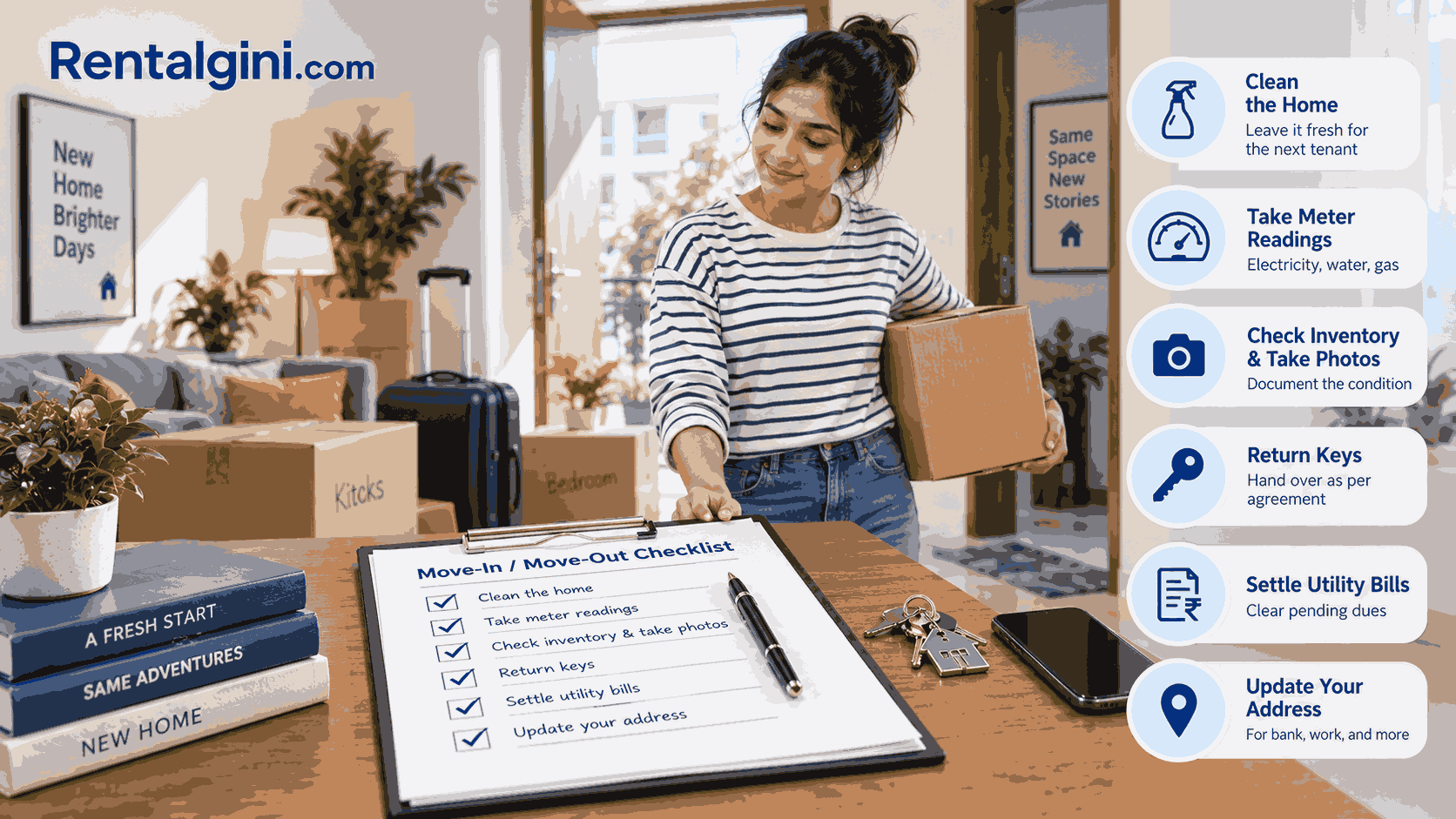
- Review the rental agreement and confirm the move-out date before beginning the handover process.
- Document property condition, settle outstanding bills, record meter readings and return all keys and access items.
- Security deposit deductions should be supported by the tenancy agreement and relevant documentation.
While moving out a rental property it is not only about packing belongings and handing over the keys. There are several important steps while moving out including giving proper notice, setting outstanding payments, inspecting property condition, completing repairs, settling security deposit and returning access items.
Poorly executed moveout process can lead to disagreement between landlords and tenants, specifically over property damage, security deposit deduction and unpaid rent. A proper managed moveout checklist helps both side parties to understand what needs to be completed before the tenancy is formally closed.
1. Audit the Rental Agreement
The first ever step is to review the rental agreement before starting the moveout process. Also review the required notice period, expected handover condition, cleaning requirements, repair responsibilities and security deposits terms.
The agreement may also include precise requirements for the inspection, utility handover, key handover, damage repair and deductions. These terms help to reduce the misunderstanding later.
2. Confirm the Move-Out Date
When the notice has been provided to the landlord the most important thing that you should confirm is the move out date. Having a mutually agreed move out date creates a clear timeline for inspection of property, handover and financial statement.
In case the tenant wants to leave earlier than the decided contractual date, clarify it before whether any rent notice-period payment or other will apply.
The agreed date of move out should be documented on writing so both parties will have the same understanding.
3. Settle Outstanding Rent and Bills
All financial obligations must be reviewed before handing the property. Which includes rent, electricity bills, water, maintenance charges, parking fees and other remaining payments which are specified in agreement.
Tenants should retain receipts of payment or transition records. Also property managers or landlords should maintain updated documented statements showing amounts received and any legitimate outstanding balance.
4. Schedule a Move-Out Inspection
Conducting a move out inspection is one of most important steps while closing a tenancy. Generally the tenant and landlord or property manager should inspect the property together.
The property manager or landlord should compare the property's current condition with the move in inspection report, inventory list and photographs. The aim is to distinguish between ordinary wear and tear and damage that may reasonably require a repair.
Keep record of any differences and agree on the required action whenever it is possible. It is always said to be a documented inspection which provides useful evidence if a disagreement arises later.
5. Document the Detailed Property's Condition
Keep clear images and videos of the property immediately before handover. Also capture walls, floors, ceilings, doors, appliances, bathrooms, kitchens and other relevant areas.
The capture image should show the property overall condition as well as a dedicated area that could become subject of a dispute.
If possible, retain the original files with their dates. Landlords may also maintain the inspection records showing the condition of property at both move in and move out. Keeping good documentation creates a transparent record for both parties.
6. Perform Agreed Required Repairs and Cleaning
Before handing the property, tenants should complete cleaning and minor responsibilities that are required under the rental agreement. This includes removing personal belongings, cleaning appliances, restoring items which are altered during the tenancy and disposing of waste.
For every imperfection tenants should not automatically accept responsibilities. A minor deterioration results in reasonable use which may differ from damage caused by negligence or misuse.
7. Record Utility Meter Readings
Before leaving property make sure you have taken final readings for electricity, gas and water meters, where applicable. These images of the meters can provide useful supportive evidence.
On the handover date the final readings should be recorded and shared with the landlord or with the property manager. Also the pending utility and amount should be identified and should be paid according to the agreed process.
8. Handover Keys and Access Items
Prepare and collect all the items that need to be returned before leaving property which includes house keys, access cards, remotes, parking cards and other property related items.
These handover items should be documented, specifically if several keys or access devices were originally provided. The property manager or landlord can confirm receipt in writing.
If any of the items is missing, discuss the replacement cost with the property manager or landlord before the final settlement rather than leaving the issue unresolved.
9. Calculate the Final Settlement
After all inspections and handover, both parties should prepare a final financial statement. This will identify rent utilities, approved repairs, other contractual charges and the security deposit.
If any amount gets deducted from the security deposit it should be supported by the tenancy agreement and relevant documentation. It is needed where repairs or services are charged, keeping invoices, receipts or other supporting records which can improve transparency.
The final decided amount to pay should be clearly communicated by both parties.
10. Finalize the Security Deposit Process
Settlement of security deposits is one of the most sensitive parts of the move out process. The property manager and landlord should calculate the refundable amount after considering the legitimate outstanding amount and documented deductions.
Also tenants should get the clear and filtered explanation of the deducted amount rather than simply receiving an unexplained reduced amount.

Aditya Bhople
Content WriterAditya Bhople writes practical property management and rental operations guidance for RentalGini.
Looking for verified rental homes?
Explore verified living spaces and workspaces across your preferred city.