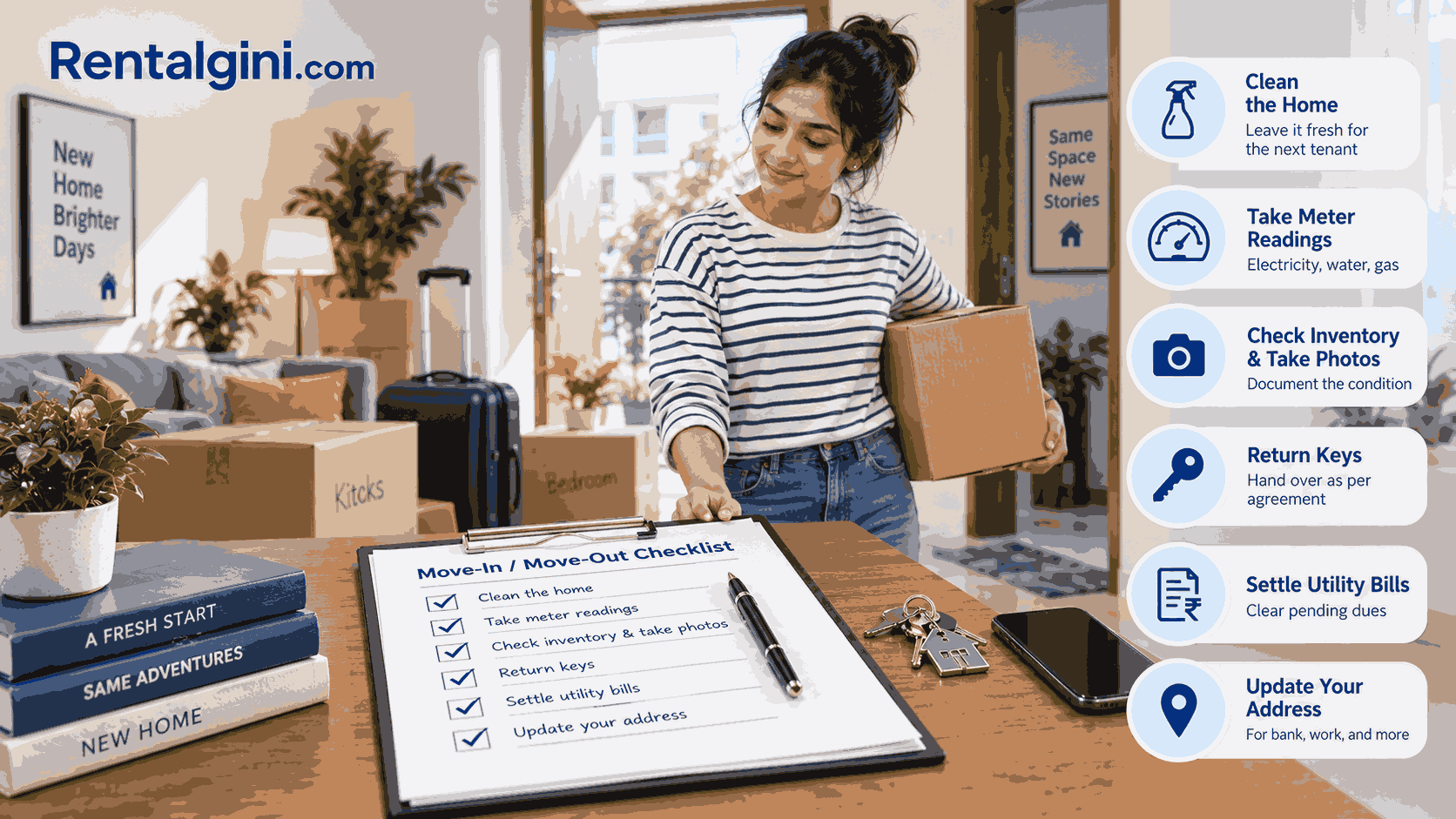
- When you decide to move out a property, what are the initial thoughts that come across your mind?
- It may be about how you shift your luggage from one place to another? What if any damage happens? Would you be paying for the last month rent or the landlord may adjust it with the security deposit?
- So, all these thoughts are 100% genuine and can trigger you during the final days of tenancy.
When you decide to move out a property, what are the initial thoughts that come across your mind?
It may be about how you shift your luggage from one place to another? What if any damage happens? Would you be paying for the last month rent or the landlord may adjust it with the security deposit? If not, will get your entire security deposit back or not?
So, all these thoughts are 100% genuine and can trigger you during the final days of tenancy.
However, you should never assume that once you vacate the property, your responsibilities will be over. From unpaid utility bills and cleaning charges to damage claims and missing documentation, several things can go wrong during the move-out process.
The good news is that you can avoid all these situations if you know the exact things to do before you move out.
Here, we have come up with a must have move-out checklist to help you avoid unnecessary deductions and make the transition to your next home much smoother.
Tenant Move-Out Checklist
A Quick Glance
| Task | Timeline |
|---|---|
| Review rent agreement | 30–60 days before moving |
| Serve notice to landlord | As per agreement |
| Schedule move-out inspection | 1–2 weeks before leaving |
| Clear all dues | Before handover |
| Complete repairs | Before inspection |
| Deep clean the property | Final week |
| Take photos and videos | Move-out day |
| Return keys and access cards | Handover day |
| Obtain written acknowledgement | Handover day |
| Follow up on deposit refund | After vacating |
1. Review Your Rent Agreement
Before you inform your landlord about moving out, make sure to check the rental agreement first and revisit all the terms and conditions.
Once you know the rules, you can put your part with full confidence.
Pay special attention to -
- Notice period requirements.
- Security deposit refund terms.
- Painting clauses.
- Maintenance obligations.
- Utility payment responsibilities.
- Lock-in period conditions.
- Furnishing and appliance responsibilities.
Knowing these terms beforehand can help you avoid conflicts with the landlord later.
2. Inform Your Landlord in Writing
Don’t just go on verbal communication about moving out. Give a proper written notice to your landlord.
Even if you are in good terms with your landlord, always communicate your move-out plans in writing.
Share a formal notice mentioning the reason of moving out, tentative notice period, and request the landlord to do the final inspection and proceed the security deposit refund. You can share the notice either on Email or WhatsApp or any property management platforms.
Keep screenshots and copies of all communication. If disagreements arise later, written records can be extremely useful.
3. Clear All Outstanding Payments
Before handing over the keys, ensure there are no pending dues including -
- Monthly rent.
- Electricity bills.
- Water charges.
- Gas bills.
- Internet bills.
- Society maintenance charges.
- Parking fees, if applicable.
Download payment receipts and store them safely.
Many deposit delays occur simply because landlords are waiting for final utility bills to be settled.
4. Repair Tenant-Caused Damage
Normal wear and tear is expected in any rented property. However, damage caused by the tenants’ negligence may result in deductions.
Common Examples of Normal Wear and Tear
- Minor wall marks.
- Faded paint.
- Slight flooring wear.
- Loose cabinet handles.
Common Examples of Chargeable Damage
- Broken switches.
- Damaged furniture.
- Cracked mirrors.
- Broken window panes.
- Missing fixtures.
- Large wall holes.
If repairs are minor and inexpensive, it’s better to fix them before handing over the keys to avoid any deductions in the security deposit amount later.
5. Deep Clean the Property
It’s a polite gesture to handover the property in the same neat and clean condition as you received it.
Even if your agreement doesn't specifically mention professional cleaning, leaving the property in a clean condition creates a positive impression during inspection.
What needs to be cleaned?
Kitchen
- Cabinets
- Chimney
- Exhaust fan
- Countertops
- Sink
- Appliances
Bathroom
- Tiles
- Shower area
- Mirrors
- Wash basin
- Toilet fittings
Living Areas
- Floors
- Windows
- Fans
- Cupboards
- Switchboards
If you can’t do it alone, you can hire a professional cleaning service to make it easier.
6. Take Photos and Videos of Everything
This step is crucial even when you move in and also when you move out.
Before handing over possession:
- Photograph every room.
- Record a complete walkthrough video.
- Capture walls, floors, and ceilings.
- Photograph appliances and furniture.
- Record meter readings.
- Document any existing wear and tear.
These records provide evidence of the property's condition at the time of handover and whether it matches the same at the time of move in.
7. Conduct a Final Property Inspection
Invite the landlord over to perform the inspection in front of you.
During the inspection -
- Review the property's condition.
- Verify inventory items.
- Discuss any potential deductions.
- Confirm meter readings.
- Identify unresolved issues.
This is the ideal time to address concerns and discuss them upfront rather than waiting until after you've moved out.
If you think any deductions may happen, request a detailed explanation from the landlord instead of accepting any invalid charges.
8. Return All Keys and Access Items
Whether you rented a fully-furnished or semi-furnished home, make sure you return each item with proper validation.
Also, don’t forget to return these important things like -
- Main door keys.
- Duplicate keys.
- Mailbox keys.
- Access cards.
- Parking stickers.
- Remote controls.
9. Get Written Handover Confirmation
Once possession is handed over, ask for written confirmation in form of either a signed handover document, an email acknowledgement, or a WhatsApp confirmation.
The acknowledgement should clearly specify that the inspection have been completed, the property has been transferred to the landlord in a good condition, and keys have been returned too. Also mention if any deductions were agreed upon.
10. Discuss Security Deposit Refund Before Leaving
This is the most crucial part of moving out. Have a completely transparent discussion with your landlord and ask for every single detail regarding the security deposit refund procedure. Also go through the agreement to stay informed.
Clarify things about -
- Refund amount.
- Expected deductions.
- Refund timeline.
- Payment method.
If deductions are being made, request a complete breakdown from the landlord.

Saloni Jain
Content WriterSaloni Jain contributes practical rental and real estate guidance for RentalGini.
Looking for verified rental homes?
Explore verified living spaces and workspaces across your preferred city.