- Ready-to-move homes allow buyers to inspect the actual property and avoid construction waiting risk.
- Under-construction homes may offer staggered payments and more inventory choice, but they involve GST and possession risk.
- The right choice depends on cash flow, urgency, willingness to wait and the quality of legal and RERA verification.
You have finally made up your mind to purchase a property but confused between what to buy. Whether to invest in a ready-to-move property or go with an under-construction property, the choice is hard.
Your decision may depend on various factors. There are pros and cons to everything.
Here in this blog, we will help you make a well-informed decision for whatever property you’d like to go with.
Ready-to-Move Properties: What You See Is What You Get?
A completed property lets you inspect the thing you're actually buying instead of a brochure promising what it will become.
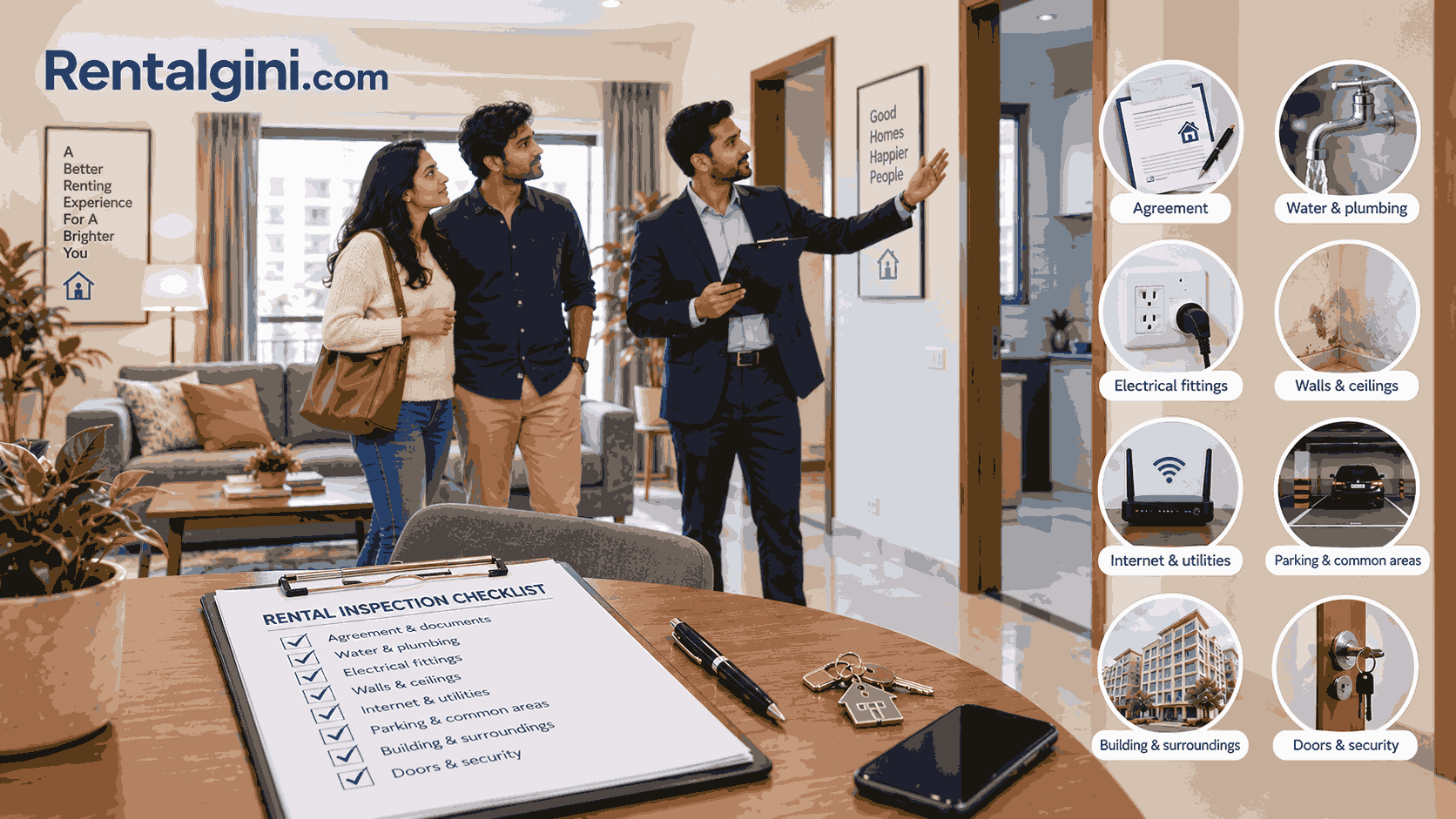
You can check the actual carpet area, natural light, ventilation, water pressure, parking location, approach road, lifts and common areas.
You can even visit at different times of the day. A flat that looks peaceful at 11 AM might tell a different story at 8 PM.
The Pros
- Zero GST in the usual completed-property scenario: A completed apartment sold after the applicable completion/first-occupation condition generally doesn't attract GST on the construction service.
- No rent-plus-waiting problem: You can move in as soon as possession, registration and other formalities are complete.
- Actual inspection: You're not judging the finished home from a sample flat.
The Cons
- The biggest one is price. A completed home may carry a premium because you're paying for immediate possession and less execution risk.
- You may also have fewer choices of floor, facing or layout.
And ‘ready-to-move’ doesn't mean you can skip the paperwork.
Verify the title, encumbrances, sanctioned plans, completion/occupancy certificate, pending dues, and the final cost sheet before you plan to buy the property.
Under-Construction Properties: Staggered Payments, Higher Risk
Under-construction homes have one important attraction that you don't necessarily need to pay the entire purchase price at once.
A construction-linked plan can spread payments across project milestones. Early buyers may also get more choice of floors, layouts and views.
But you're buying something that doesn't exist in its final form yet.
The Pros
- Staggered payments: Your payments may be linked to construction progress.
- Better choice: Early buyers usually have more inventory to choose from.
- Potential price growth: If the surrounding area develops and market prices rise during construction, your property could appreciate. That's a possibility, not a guarantee.
The Cons
- GST: Most qualifying under-construction residential apartments attract 5% GST, or 1% for qualifying affordable housing.
- Rent and loan overlap: You could be paying rent while also servicing a housing loan. Depending on the lender's structure, this may be pre-EMI or regular EMI on the amount disbursed. Don't assume every bank handles it the same way.
- Possession risk: A promised ‘2-year possession’ date means little unless it's reflected properly in your agreement and RERA disclosures.
RERA does give buyers important safeguards. Promoters must keep 70% of amounts collected from allottees in a separate account for land and construction costs, and buyers have statutory remedies in qualifying delayed-possession situations. But RERA is more like a protection after something goes wrong, it isn't a guarantee that construction will finish on time.
Which One Matches Your Expectations?
Choose a Ready-to-Move Property if:
- You're paying substantial rent every month.
- You need a home within the next few months.
- You want to inspect the actual property before buying.
- A construction delay would put pressure on your finances.
Choose an Under-Construction Property if:
- You can comfortably keep paying rent while waiting.
- Your cash flow suits milestone-based payments.
- You're willing to take project and possession risk.
- You've thoroughly checked the developer's track record and RERA disclosures.
However, the preferences may vary from person to person and their situations.
Based on a Colliers survey performed in 2026, more than 60% of respondents preferred ready-to-move or near-completion homes, with possession certainty and lower execution risk cited among the reasons. Whereas, younger buyers showed greater willingness to take construction risk.
The Important Checks That Can Save You Lakhs!
- For a ready-to-move home: Check the OC/CC, title, encumbrances, sanctioned plan, maintenance dues, utilities, parking rights and every item in the final cost sheet.
- For an under-construction home: Check the RERA registration, promised possession date, construction progress, developer's previous projects, payment schedule, cancellation clause and delay compensation terms.
Also remember this RERA safeguard: a promoter generally cannot collect more than 10% of the apartment cost as advance or application money before entering into a written and registered agreement for sale.
The Wrapping Thoughts
The cheaper property isn't necessarily the cheaper home.
A ready-to-move property asks you to pay more upfront, but you can be certain of what you’re going to get.
On the other hand, an under-construction property can offer a lower entry price, staggered payments and more choice. In exchange, you take on waiting, financing costs and project risk.
Before signing, calculate the price gap minus GST, rent, financing costs, and other charges.
Sometimes INR 15 lakh is a genuine saving. Sometimes it's just a number that looks good on the builder's price sheet.

Saloni Jain
Content WriterSaloni Jain contributes practical rental and real estate guidance for RentalGini.
Want more tenant enquiries?
List your space on RentalGini and help renters compare your property with clear details.